


 Find Your Store
Timeless design meets precision craftsmanship with Alexandria Mouldings, a trusted name in architectural wood products. We proudly carry a wide selection of Alexandria Mouldings perfect for enhancing interior spaces with baseboards, casings, crown mouldings, wainscoting, and more—all crafted to elevate the style and finish of any room. With a reputation built on quality, consistency, and innovation, Alexandria offers mouldings in a variety of materials including solid wood, MDF, and pre-primed options that are easy to install and ready to paint or stain. Whether you're completing a new build, tackling a renovation, or adding elegant detail to your home, Alexandria provides profiles to suit every taste—from classic to contemporary. As a proudly Canadian company, Windsor Plywood is committed to offering the best in finishing products along with expert, one-on-one service. Explore Alexandria Mouldings and discover how small details can make a big difference in your home.
Frequently Asked Questions
What cove moulding does Windsor Plywood carry?
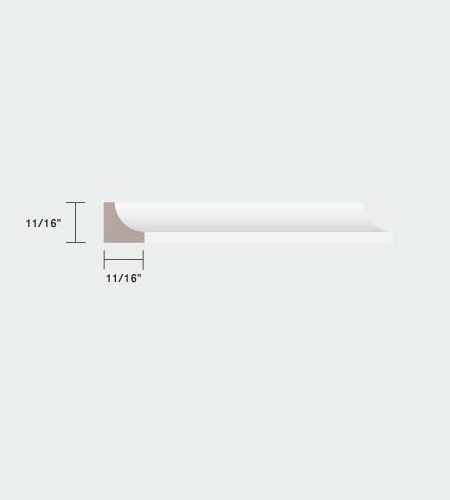
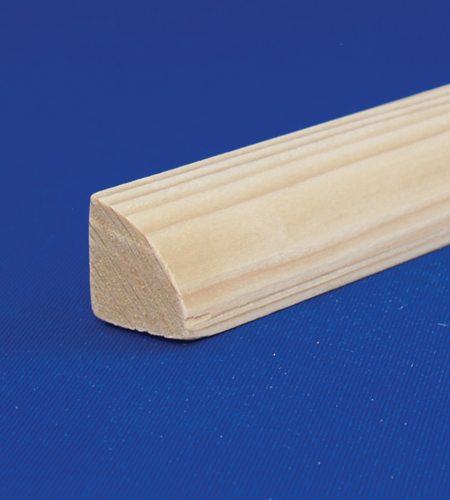
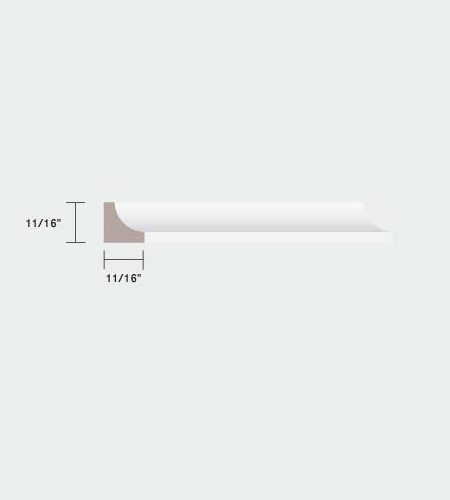
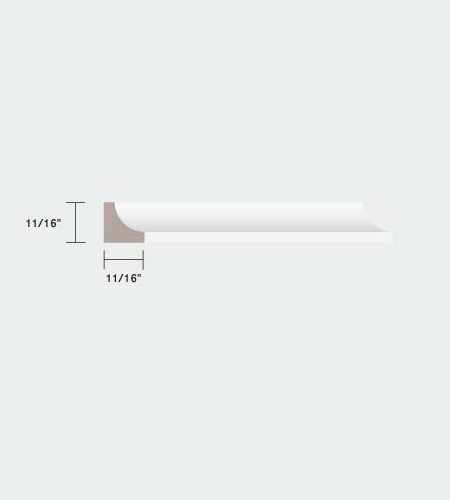
Windsor Plywood carries cove moulding in painted-grade and wood profiles from Alexandria Moulding and Metrie. Cove profiles range from small 1-inch utility cove used for inside corner trim to larger 3-inch and 4-inch architectural cove profiles used for ceiling and cornice applications. Available in pine, finger-jointed pine, and paint-grade MDF.
What is cove moulding used for?
Cove moulding is a concave quarter-round profile used for inside corner transitions between walls and ceilings, at shelf edges for a furniture-style detail, in cornice and crown assemblies as a component piece, and as an inside corner blocking piece for cabinet face frames. Small cove is also used as a glue block in furniture joinery. The concave profile is the defining feature that distinguishes cove from quarter-round (convex profile).
How does cove moulding differ from crown moulding?
Cove moulding is a simple concave profile that runs flat along a wall-ceiling or shelf-wall transition. Crown moulding is a compound profile that springs away from both the wall and ceiling surfaces at an angle, creating a larger, more decorative transition. Crown moulding is the more decorative and architecturally significant of the two, while cove provides a simpler, cleaner transition line.
How is cove moulding cut for inside corners?
For flat inside corners at right angles, cove moulding can be either mitre-cut or cope-cut. Mitre cuts use complementary 45-degree angles where two pieces meet at the corner — appropriate for paint-grade applications where any gap can be caulked. Coped joints are more precise and preferred by finish carpenters: one piece runs square to the corner and the second piece is cut to follow the profile of the first, fitting tightly regardless of the corner angle.
What is the correct nail size for installing cove moulding?
Use 15-gauge or 16-gauge finish nails in lengths matched to the thickness of the moulding plus the wall surface material. For cove moulding up to 1 inch thick, 1-1/2 to 2-inch nails are appropriate. Nail into wall studs and ceiling joists where possible for maximum holding strength. Set nail heads slightly below the surface with a nail set and fill with painter's putty before painting.